Welcome to Smartindia Student's Blogall posts
Maria Goretti

 | Learn about Our Patron Saint The story of St. Maria Goretti is both inspiring and sad. Her death in 1902, at the age of eleven, was the result of a violent sexual assault. Because of this, Maria is considered to be a “martyr of chastity.” The forgiveness she granted to her assailant eventually resulted in his conversion. Maria is the youngest canonized saint. St. Maria Goretti was declared a saint by Pope Pius XII in 1950. Her mother attended her canonization, and is the only parent of a saint ever to have done so. St. Maria Goretti’s intercession is sought for rape victims, those who have lost parents, girls, young people in general, as well as against poverty. |
Mary (mother of Jesus)
Mary (mother of Jesus)

Mary (Hebrew: ???????, Miriam; Aramaic: Mary?m; Arabic: ????, Maryam), variously called Saint Mary, Mother Mary, the Virgin Mary, the Theotokos, the Blessed Virgin Mary,Mary, Mother of God, and, in Islam, as Maryam, mother of Isa', was an Israelite Jewish[1] woman of Nazareth in Galilee who lived in the late 1st century BC and early 1st century AD, and is considered by Christians to be the first proselyte to Christianity. She is identified in the New Testament[Mt 1:16,18-25][Lk 1:26-56][2:1-7] and in the Qur'anas the mother of Jesus through divine intervention. Christians hold her son Jesus to be Christ (i.e. the messiah) and God the Son Incarnate (see Trinitarian monotheism), whereas Muslims regard Jesus as the messiah and the most important prophet of God sent to the people of Israel (and the second-most-important prophet of all, lesser than Muhammad alone).
The canonical gospels of Matthew and Luke describe Mary as a virgin (Greek ????????, parthénos).[2] Traditionally, Christians believe that she conceived her son miraculously by the agency of the Holy Spirit. Muslims believe that she conceived by the command of God. This took place when she was already betrothed to Saint Joseph and was awaiting the concluding rite of marriage, the formal home-taking ceremony.[3] She married Joseph and accompanied him to Bethlehem, where Jesus was born.[4] In keeping with Jewish custom, the betrothal would have taken place when she was around 12, and the birth of Jesus about a year later.[5]
The New Testament begins its account of Mary's life with the Annunciation, when the angel Gabriel appeared to her and announced her divine selection to be the mother of Jesus. Church tradition and early non-biblical writings state that her parents were an elderly couple, Saint Joachim and Saint Anne. The Bible records Mary's role in key events of the life of Jesus from his conception to his Ascension. Apocryphal writings tell of her subsequent death and bodily assumption into heaven.
Christians of the Catholic Church, the Eastern Orthodox Church, Oriental Orthodox Church, Anglican Communion, and Lutheran churches believe that Mary, as mother of Jesus, is the Mother of God (????? ????) and the Theotokos, literally Bearer of God. Mary has been venerated since Early Christianity.[6][7] Throughout the ages she has been a favorite subject in Christian art, music, and literature.
There is significant diversity in the Marian beliefs and devotional practices of major Christian traditions. The Catholic Church has a number of Marian dogmas, such as the Immaculate Conception of Mary the Perpetual Virginity of Mary, and the Assumption of Mary into Heaven. Catholics refer to her as Our Lady and venerate her as theQueen of Heaven and Mother of the Church; most Protestants do not share these beliefs.[8][9] Many Protestants see a minimal role for Mary within Christianity, based on the brevity of biblical references.[10]
St. Aloysius Gonzaga, S.J.
St. Aloysius Gonzaga, S.J. 
Confessor Born March 9, 1568
Castiglione delle Stiviere,
Duchy of Mantua,
Holy Roman EmpireDied June 21, 1591 (aged 23)
Rome, Papal StatesHonored in Roman Catholic Church Beatified October 19, 1605, Rome, Papal States by Pope Paul V Canonized December 31, 1726, Rome, Papal States by Pope Benedict XIII Majorshrine Church of Sant'Ignazio,
Rome, ItalyFeast 21 June Attributes Lily, cross, skull, rosary Patronage Young students, Christian youth,Jesuit novices, the blind, AIDS patients, AIDS care-givers
Thérèse of Lisieux
| Saint Thérèse of Lisieux | |
|---|---|
 Photograph of Saint Thérèse of Lisieux in the CarmeliteBrown Scapular (1895) | |
| Virgin and Doctor of the Church | |
| Born | 2 January 1873 Alençon, France |
| Died | 30 September 1897 (aged 24) Lisieux, France |
| Honored in | Catholic Church |
| Beatified | April 29, 1923 by Pope Pius XI |
| Canonized | May 17, 1925 by Pope Pius XI |
| Majorshrine | Basilica of St. Thérèse in Lisieux, France |
| Feast | October 1st October 3rd in General Roman Calendar 1927–1969, Melkite Catholic Church |
| Attributes | Roses |
| Patronage | Missionaries; France; Russia;HIV/AIDS sufferers; florists and gardeners; loss of parents; tuberculosis; the Russicum. |
Saint Thérèse of Lisieux (January 2, 1873 – September 30, 1897), or Saint Thérèse of the Child Jesus and the Holy Face, born Marie-Françoise-Thérèse Martin, was a French Carmelite nun. She is also known as "The Little Flower of Jesus" or simply, "The Little Flower".
She felt an early call to religious life, and overcoming various obstacles, in 1888 at the early age of 15, became a nun and joined two of her elder sisters in the cloistered Carmelite community of Lisieux, Normandy. After nine years as a Carmelite religious, having fulfilled various offices such assacristan and assistant to the novice mistress, and having spent the last eighteen months in Carmel in a night of faith, she died of tuberculosis at the age of 24.
The impact of The Story of a Soul, a collection of her autobiographical manuscripts, printed and distributed a year after her death to an initially very limited audience, was great, and she rapidly became one of the most popular saints of the twentieth century. Pope Pius XI made her the "star of his pontificate".[1] She was beatified in 1923, and canonized in 1925. Thérèse was declared co-patron of the missions with Francis Xavier in 1927, and named co-patron of France with Joan of Arc in 1944. On October 19, 1997 Pope John Paul II declared her the thirty-third Doctor of the Church, the youngest person, and only the third woman, to be so honored. Devotion to Thérèse has developed around the world.[2]
Thérèse lived a hidden life and "wanted to be unknown," yet became popular after her death through her spiritual autobiography - she also left letters, poems, religious plays, prayers, and her last conversations were recorded by her sisters. Paintings and photographs, mostly the work of her sister Céline, further led to her being recognised by millions of men and women.
The depth of her spirituality, of which she said, "my way is all confidence and love," has inspired many believers. In the face of her littleness and nothingness, she trusted in God to be her sanctity. She wanted to go to heaven by an entirely new little way. "I wanted to find an elevator that would raise me to Jesus." The elevator, she wrote, would be the arms of Jesus lifting her in all her littleness. However, according to Guy Gaucher, one of her biographers after her death, "Thérèse fell victim to an excess of sentimental devotion which betrayed her. She was victim also to her language, which was that of the late nineteenth century and flowed from the religiosity of her age."[3] Thérèse herself said on her death-bed, "I only love simplicity. I have a horror of pretence", and she spoke out against some of the lives of saints written in her day, "We should not say improbable things, or things we do not know. We must see their real, and not their imagined lives."[3]
Thérèse is well known throughout the world, with the Basilica of Lisieux being the second largest place of pilgrimage in France after Lourdes.[4]
Ceferino Namuncurá
Ceferino Namuncurá 
Born August 26, 1886
Chimpay, Río Negro Province,ArgentinaDied May 11, 1905 (aged 18)
Rome, ItalyHonored in Roman Catholicism Beatified November 11, 2007, Chimpay, Río Negro Province, Argentina by PopeBenedict XVI Feast August 26
St. Joseph Cafasso
St. Joseph Cafasso 
Confessor Born January 15, 1811
Castelnuovo, Piedmont, ItalyDied June 23, 1860 (aged 49)
Turin, ItalyHonored in Roman Catholic Beatified 1925 Canonized 1947 by Pope Pius XII Feast June 22 Attributes Minister Patronage prison chaplains, captives, imprisoned people and prisoners
Francis de Sales
St. Francis de Sales, C.O., T.O.M. 
Bishop, Confessor, Doctor of the Church
and tertiary of the Order of MinimsBorn 21 August 1567
Château de Sales
Duchy of SavoyDied 28 December 1622 (aged 55)
Lyon, FranceHonored in Roman Catholic Church
Anglican CommunionBeatified 8 January 1661, Rome by Pope Alexander VII Canonized 8 April 1665, Rome by Pope Alexander VII Majorshrine Annecy, France Feast 24 January
23 January Anglican Church of Wales
January 29 (local communities and among Traditional Roman Catholics)Attributes Heart of Jesus, Crown of Thorns Patronage Baker, Oregon; Cincinnati, Ohio; Catholic press; Columbus, Ohio; confessors; deaf people; educators; Upington, South Africa;Wilmington, Delaware; writers;journalists; the Institute of Christ the King Sovereign Priest
The Story of St. Maria Goretti
The Story of St. Maria Goretti
It was a hot, humid day in early July. After the meal everyone but Maria went back to their threshing. Maria sat sewing. She was only eleven years old but her father, Luigi Goretti, had died and her mother and brothers had to work in the fields, so the little girl was in charge of the household duties. They lived near Anzio, Italy, in a house they shared with Giovanni Serenelli, a widower, and his son, Alessandro, nineteen. This day Giovanni sat down to rest, saying he was sick, at the bottom of the stairs leading up to where they lived. On the landing at the top of the stairs Maria's little sister, Teresa, and a neighbor's baby girl were asleep on a blanket.
Alessandro was taken with Maria's beauty and had for some time tried to seduce her. He spoke obscenely to her, made lewd suggestions and threatened to kill Maria and her mother if she told anyone.
Now Alessandro, in an ox-cart in the field going among the stacks of beans, suddenly gave the reins to another and said he had to go back to the house to get something.
Alessandro jumped down from the cart. He spoke to his father dozing at the foot of the stairs and went up into the house. He said nothing to Maria and went to his room. He came out and called to her but she did not answer, going on with her sewing. This infuriated the hot-passioned youth and he grabbed the girl and dragged her into the kitchen and kicked the door shut. She fought him when he told her his intention. She cried, "No. It's a sin. God does not want it. You'll go to hell!"
Alessandro grew even more angry at her resistance, raised a knife and threatened her. She said, "No, no!" In a craze he struck her again and again with the knife. She shouted for help but the closed door was heavy and the noise of the threshing was loud. No one heard her. She fell to the floor, then dragged herself to the door. She opened it as Alessandro ran for his room. She screamed and this made him turn back. In a frenzy, he stabbed the girl six more times. Dropping the knife he rushed to his room and locked the door.
Alessandro's father, asleep, did not hear Maria's shriek, but he woke up to the loud crying of the babies. He jumped up, found Maria in a pool of blood, and yelled wildly to the threshers.
Maria's body was horribly mangled. It was a miracle that she was still alive. She could hardly breathe. Her mother fainted. They asked who did this terrible thing; she whispered, "It was Alessandro. He tried to make me do something that was a sin. But he couldn't make me do it. He couldn't. I wouldn't let him." She was taken to the hospital in a nearby town.
The police came to get the defiant Alessandro. A crowd of angry farmers surrounded the house. The police sent for more guards to take him away. The mob wanted to lynch him on the spot.
The doctors were astonished that the girl was still alive. Her pain-racked body was covered with blood. They said it was hopeless. The called for the priest. Someone said, "She is an angel."
Maria was burning with fever and suffering but she said, "I'm all right." Her mother, in tears, gave her the crucifix to kiss and that comforted her. The chaplain enrolled her in the Children of Mary and the blessed medal was hung around her neck on a green ribbon. She kissed the medal often. She forgave Alessandro, as she fervently received Holy communion for the last time. She said, "It is Jesus, whom I shall soon seen in heaven."
The pain grew worse. When her dear mother asked her to pray for all of them, she could no longer speak but her eyes said that she would gladly do so. And then Maria Goretti died. At the funeral, praying for her, almost all asked her to pray for them.
This young girl, beautiful in body and beautiful in soul, was canonized by Pope Pius XII on June 24, 1950. Her mother was present. Her feastday is July 6.
The Holy Father, speaking of Maria, saw her as "the perfect fruit of the kind of Catholic home where the family prays." This, he said, was the perfect "old way of education" which cannot be replaced. He said that this little unlearned farm girl, "a humble daughter of the people has been supremely exalted." He stressed the wholeness of her life. She, above all, stands for purity, but also for love of the spiritual over the material, docility to parents, harsh daily labor and sacrifice in poverty, and a great love of Jesus in the Eucharist and devotion to his holy Mother.
Since her death, Maria has been the instrument of numerous cures and miracles, including the conversion of her murderer.
The Holy Father observed during her canonization that Maria longed "to ascend to heaven by the only road that leads there, which is religion, the love of Christ and the heroic observance of his commandments."
Maria Goretti is an excellent model and intercessor for today's Catholic youth, confronted by a sea of immorality poured out on the world by the modern media. She offers children and young people a refuge, protection, a serene spirit and the deep joy of the pure of heart.
Blessed Michael Rua, S.D.B.
Blessed Michael Rua, S.D.B. 
Priest and Confessor
Co-founder of the Salesians of Don BoscoBorn 9 June 1837
Turin, Kingdom of SardiniaDied 6 April 1910 (aged 72)
Turin, ItalyHonored in Roman Catholic Church
(Salesians of Don Bosco)Beatified 29 October 1972, Rome, Italy byPope Paul VI Majorshrine Basilica of Mary, Help of Christians
Turin, ItalyFeast 29 October
Laura Vicuña
Blessed Laura Vic 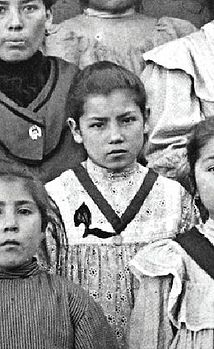 uña
uñaBorn April 5, 1891
Santiago, ChileDied January 22, 1904
Junín de los Andes, Neuquén,Argentina[1]Honored in Roman Catholic Church Beatified September 3, 1988 by Pope John Paul II[1] Feast January 22 Patronage abuse victims, Argentina, incest victims, loss of parents, martyrs
Maria Domenica Mazzarello
Maria Domenica Mazzarello 
Born May 9, 1837
Mornese, Alessandria, ItalyDied May 14, 1881 (aged 44)
MorneseBeatified November 20, 1938 Canonized June 24, 1951 Majorshrine Basilica of Our Lady Help of Christians, Turin, Italy Feast May 13
john bosco
John Bosco 
Confessor, Founder,
"Father and Teacher of Youth"Born 16 August 1815
Castelnuovo d'Asti, Piedmont, ItalyDied 31 January 1888 (aged 72) Honored in Roman Catholic Church,
Anglican CommunionBeatified 2 June 1929[1], Rome by Pius XI Canonized 1 April 1934[2], Rome by Pius XI Majorshrine The Tomb of St John Bosco, Basilica of Our Lady Help of Christians, Turin, Italy Feast 31 January Patronage Christian apprentices, editors, publishers, schoolchildren, young people, magicians