Welcome to Smartindia Student's Blogall posts
WHY DO WE TURNS OUR FACE???????

Deforestation
Deforestation, clearance or clearing is the removal of a forest or stand of trees where the land is thereafter converted to a non-forest use.[1] Examples of deforestation include conversion of forestland to farms, ranches, or urban use.
About half of the world's original forests had been destroyed by 2011, the majority during the previous 50 years.[citation needed] Since 1990 half of the world's rain forests have been destroyed.[citation needed] More than half of the animal and plant species in the world live in tropical forests.[2]
The term deforestation is often misused to describe any activity where all trees in an area are removed.[not in citation given][neutrality is disputed] However in temperate climates, the removal of all trees in an area[not in citation given]—in conformance with sustainable forestry practices—is correctly described as regeneration harvest.[3] In temperate mesic climates, natural regeneration of forest stands often will not occur in the absence of disturbance, whether natural or anthropogenic.[4]Furthermore, biodiversity after regeneration harvest often mimics that found after natural disturbance, including biodiversity loss after naturally occurring rainforest destruction.[5][6]
Deforestation occurs for many reasons: trees are cut down to be used or sold as fuel (sometimes in the form of charcoal) or timber, while cleared land is used as pasture for livestock, plantations of commodities and settlements. The removal of trees without sufficient reforestation has resulted in damage to habitat, biodiversity loss and aridity. It has adverse impacts on biosequestration of atmospheric carbon dioxide. Deforestation has also been used in war to deprive an enemy of cover for its forces and also vital resources. A modern example of this was the use of Agent Orange by the United States military in Vietnam during the Vietnam War. Deforested regions typically incur significant adverse soil erosion and frequently degrade into wasteland.
Disregard or ignorance of intrinsic value, lack of ascribed value, lax forest management and deficient environmental laws are some of the factors that allow deforestation to occur on a large scale. In many countries, deforestation, both naturally occurring and human induced, is an ongoing issue. Deforestation causes extinction, changes to climatic conditions, desertification, and displacement of populations as observed by current conditions and in the past through the fossil record.[5]
Among countries with a per capita GDP of at least US$4,600, net deforestation rates have ceased to increase.[when?][7][8]

History of Kerala
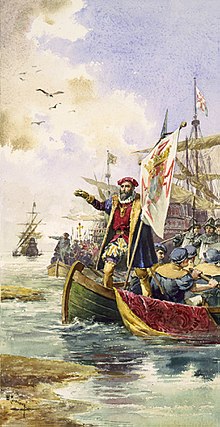 The history of Kerala, India, goes back more than several millennia. Stone age carving inEdakkal Caves had pictorial writings believed to be dating to at least 5000 BC, from theNeolithic man, indicating the presence of a prehistoric civilization or settlement in this region.[1] From as early as 3000 BC, Kerala had established itself as a major spice tradecenter. Kerala had direct contact across the Arabian Sea with all the major Red Sea ports and the Mediterranean ports as well as extending to ports in the Far East. The spice tradebetween Kerala and much of the world was one of the main drivers of the world economy. For much of history, ports in Kerala were the busiest (Muziris) among all trade and travel routes in the history of the world.
The word Kerala is first recorded (as Keralaputra) in a 3rd-century BCE rock inscription (Rock Edict 2) left by the Maurya emperor Asoka (274–237 BCE).[2] The Land of Keralaputrawas one of the four independent kingdoms in southern India during Asoka's time, the others being Chola, Pandya, and Satiyaputra.[3] These territories once shared a common language and culture, within an area known as Tami?akam.[4] The Cheras collapsed after repeated attacks from the neighboring Chola Empire and Rashtrakuta Empire. In the 8th century Adi Shankara was born in central Kerala, who travelled extensively across the Indian subcontinent, establishing institutions of Advaita Vedanta philosophy.
Contact with Europeans after the arrival of Vasco Da Gama in 1498 gave way to struggles between colonial and native interests. In 1795, the area was under British dominion. After independence, the state of Kerala was created in 1956 from the former state of Travancore-Cochin, the Malabar district of Madras State, and the Kasaragod taluk of Dakshina Kannada.[5]
 Mohanlal Vishwanathan Nair, known mononymously as Mohanlal, is an Indian film actor and producer best known for his work in Malayalam films. Mohanlal made his acting debut in Thiranottam but the film was never released due to censorship issues.
 Mohandas Karamchand Gandhi, commonly known as Mahatma Gandhi, was the preeminent leader of Indian nationalism in British-ruled India.
 Sachin Ramesh Tendulkar AM is an Indian cricketer widely acknowledged as the greatest living batsman, and second only to Don Bradman in the all time greatest list in Test.
Albert Einstein
 Albert Einstein (
 /?ælb?rt ?a?nsta?n/; German:[?alb?t ?a?n?ta?n] (
 listen); 14 March 1879 – 18 April 1955) was a German-born theoretical physicist who developed the general theory of relativity, effecting a revolution in physics. For this achievement, Einstein is often regarded as the father of modern physics[2][3]and the most influential physicist of the 20th century. While best known for his mass–energy equivalenceformula E = mc2 (which has been dubbed "the world's most famous equation"),[4] he received the1921 Nobel Prize in Physics "for his services to theoretical physics, and especially for his discovery of the law of the photoelectric effect".[5] The latter was pivotal in establishing quantum theory.
Near the beginning of his career, Einstein thought that Newtonian mechanics was no longer enough to reconcile the laws of classical mechanics with the laws of the electromagnetic field. This led to the development of his special theory of relativity. He realized, however, that the principle of relativity could also be extended to gravitational fields, and with his subsequent theory of gravitation in 1916, he published a paper on the general theory of relativity. He continued to deal with problems of statistical mechanics and quantum theory, which led to his explanations of particle theory and the motion of molecules. He also investigated the thermal properties of light which laid the foundation of thephoton theory of light. In 1917, Einstein applied the general theory of relativity to model the structure of the universe as a whole.[6]
He was visiting the United States when Adolf Hitlercame to power in 1933, and did not go back to Germany, where he had been a professor at theBerlin Academy of Sciences. He settled in the U.S., becoming a citizen in 1940.[7] On the eve of World War II, he helped alert President Franklin D. Roosevelt that Germany might be developing an atomic weapon, and recommended that the U.S. begin similar research; this eventually led to what would become the Manhattan Project. Einstein was in support of defending the Allied forces, but largely denounced using the new discovery of nuclear fissionas a weapon. Later, with the British philosopherBertrand Russell, Einstein signed the Russell–Einstein Manifesto, which highlighted the danger of nuclear weapons. Einstein was affiliated with theInstitute for Advanced Study in Princeton, New Jersey, until his death in 1955.
Einstein published more than 300 scientific papersalong with over 150 non-scientific works.[6][8] His great intellectual achievements and originality have made the word "Einstein" synonymous withgenius.[9]


 CHILD LABOUR
BIODIVERSITY ACT
The Indian parliament enacted the biological diversity act in 2002
and the national biodiversity rules in 2004. the main objective of
the act are conservation of biodiversity, sustainable use of its
components and fair and equitable sharing of the benefits arising
out of the utilization of genetic resources. The traditional associated
with biological resources is not protected under this act.