Welcome to Smartindia Student's Blogall posts
my village

.jpg)


A village is a clustered human settlement or community, larger than a hamlet but smaller than a town with the population ranging from a few hundred to a few thousand (sometimes tens of thousands). Though often located in rural areas, the term urban village is also applied to certainurban neighbourhoods, such as the East Village in Manhattan, New York City and the Saifi Village in Beirut, Lebanon, as well as HampsteadVillage in the London conurbation. Villages are normally permanent, with fixed dwellings; however, transient villages can occur. Further, the dwellings of a village are fairly close to one another, not scattered broadly over the landscape, as a dispersed settlement.
In the past, villages were a usual form of community for societies that practise subsistence agriculture, and also for some non-agricultural societies. In Great Britain, a hamlet earned the right to be called a village when it built a church.[1] In many cultures, towns and cities were few, with only a small proportion of the population living in them. The Industrial Revolution attracted people in larger numbers to work in mills and factories; the concentration of people caused many villages to grow into towns and cities. This also enabled specialization of labor and crafts, and development of many trades. The trend of urbanization continues, though not always in connection with industrialisation. Villages have been eclipsed in importance as units of human society and settlement.
Contents[hide] |
my home
 | This article needs additional citations for verification. (May 2008) |


A home is a place of residence or refuge.[1] When it refers to a building, it is usually a place in which an individual or a family can live and store personal property. It is generally a place to provide safety and is used as a center from which people or animals base their daily activities. Most modern-dayhouseholds contain sanitary facilities and a means of preparing food. Animals have their own homes as well, either living in the wild or shared with humans in a domesticated environment. Home might have a Sanskrit aham (self) or akam (self) in Tamil as its etymology.
Home is also used to refer to the geographical area (whether it be a suburb, town, city or country) in which a person grew up or feels they belong, or it can refer to the native habitat of a wild animal. There are cultures in which homes are mobile such as nomadic peoples. Sometimes, as an alternative to the definition of home as a physical locale ("Home is where you hang your hat"[2]), home may be perceived to have no physical location, instead, home may relate instead to a mental or emotional state of refuge or comfort. Popular sayings along these lines are "Home is where the heart is"[3] or "You can never go home again".
Contents[hide] |
[edit]Terminology


The word "home" can be used for various types of residential community institutions in which people can live, such as nursing, retirement homes for seniors, prisons for criminals, treatment facilities, foster homes, etc. A home is generally a place that is close to the heart of the owner, and can become a prized possession.
In computer terminology, a 'home' may refer to a starting view that branches off into other tasks, e.g. a homepage or a desktop. In a full screen editor, home is often used to mean the top-leftmost character cell, or the leftmost cell on a line in a line editor. These are the initial ones used by left-to-right languages. A standard 101-key PC keyboard contains a Home key. Many home pages on the with introductory information, recent news or events, and links tosubpages. "Home" may also refer to a home directory which contains the personal files of a given user of the computer system.
[edit]History
Buildings such as huts and longhouses have been used for living since the late Neolithic.[4] Homes may be lost in many ways, such as Natural Disasters.[5] Other people have lost their homes through events by humans such as Sherman's March to the Sea.[6]
[edit]Psychological impact
Since it can be said that humans are generally creatures of habit, the state of a person's home has been known to physiologically influence their behavior, emotions, and overall mental health.[7][unreliable source?] The loss of a home (due to whatever reason, be it through accident or natural disaster, repossession, or in the case of children simply the decision to move on the part of the parents) can be a valid cause of relocation.
Some people may become homesick when they leave their home over an extended period of time. Sometimes homesickness can cause a person to feel actual symptoms of illness. It has been argued that psychologically "The strongest sense of home commonly coincides geographically with a dwelling. Usually the sense of home attenuates as one moves away from that point, but it does not do so in a fixed or regular way."[8] Furthermore, places like homes can trigger self-reflection, thoughts about who someone is or used to be or who they might become. These types of reflections also occur in places where there is a collective historical identity, such as
pollar bear


| Polar bear | |
|---|---|
 | |
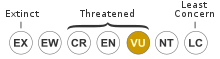
| Conservation status | |
| Scientific classification | |
| Kingdom: | Animalia |
| Phylum: | Chordata |
| Class: | Mammalia |
| Order: | Carnivora |
| Family: | Ursidae |
| Genus: | Ursus |
| Species: | U. maritimus |
| Binomial name | |
| Ursus maritimus Phipps, 1774[2] | |
 | |
| Polar bear range | |
| Synonyms | |
Ursus eogroenlandicus | |
animals
| Animals Temporal range: Ediacaran – Recent | |
|---|---|
 | |
| Scientific classification | |
| Domain: | Eukaryota |
| (Unranked) | Opisthokonta |
| (Unranked) | Holozoa |
| (Unranked) | Filozoa |
| Kingdom: | Animalia Linnaeus, 1758 |
| Phyla | |
| |
birds
And see text
White-throated Rock Thrush
(Monticola gularis)Scientific classification 
Kingdom: Animalia Phylum: Chordata Clade: Avialae Class: Aves
Linnaeus, 1758[1]Subclasses
tailor bird
| Tailorbird | |
|---|---|
 | |
| Common Tailorbirds (Orthotomus sutorius) | |
| Scientific classification | |
| Kingdom: | Animalia |
| Phylum: | Chordata |
| Class: | Aves |
| Order: | Passeriformes |
| Family: | Cisticolidae |
| Genus: | Orthotomus Horsfield, 1821 |
| Species | |
parrot
| Parrots Temporal range: 54–0MaEarly Eocene[1] – Recent | |
|---|---|
 | |
| A Blue-and-yellow Macaw flying | |
| Scientific classification | |
| Kingdom: | Animalia |
| Phylum: | Chordata |
| Class: | Aves |
| Infraclass: | Neognathae |
| Order: | Psittaciformes Wagler, 1830 |
| Superfamilies | |
Cacatuoidea (cockatoos) | |
penguin
| Ostrich Temporal range: Pleistocene–presentPleistocene to Recent | |
|---|---|
 | |
| Male (left) and female (right) | |
| Conservation status | |
| Scientific classification | |
| Kingdom: | Animalia |
| Phylum: | Chordata |
| Subphylum: | Vertebrata |
| Class: | Aves |
| Superorder: | Paleognathae |
| Order: | Struthioniformes |
| Family: | Struthionidae |
| Genus: | Struthio |
| Species: | S. camelus |
| Binomial name | |
| Struthio camelus Linnaeus, 1758[2] | |
| Subspecies | |
S. c. australus Gurney, 1868[2] | |

ostrich
| Ostrich Temporal range: Pleistocene–presentPleistocene to Recent | |
|---|---|
| |
| Male (left) and female (right) | |
| Conservation status | |
| Scientific classification | |
| Kingdom: | Animalia |
| Phylum: | Chordata |
| Subphylum: | Vertebrata |
| Class: | Aves |
| Superorder: | Paleognathae |
| Order: | Struthioniformes |
| Family: | Struthionidae |
| Genus: | Struthio |
| Species: | S. camelus |
| Binomial name | |
| Struthio camelus Linnaeus, 1758[2] | |
| Subspecies | |
S. c. australus Gurney, 1868[2] | |
goat
| Domestic Goat | |
|---|---|
 | |
| Conservation status | |
Domesticated | |
| Scientific classification | |
| Kingdom: | Animalia |
| Phylum: | Chordata |
| Class: | Mammalia |
| Order: | Artiodactyla |
| Family: | Bovidae |
| Subfamily: | Caprinae |
| Genus: | Capra |
| Species: | C. aegagrus |
| Subspecies: | C. a. hircus |
| Trinomial name | |
| Capra aegagrus hircus (Linnaeus, 1758) | |
| Synonyms | |

kittens
.jpg)
A kitten is a juvenile domesticated cat.[1] A feline litter usually consists of two to five kittens. To survive, kittens need the care of their mother for the first several weeks of their life. Kittens are highly social animals and spend most of their waking hours playing and interacting with available companions.
Contents[hide] |
Etymology
The word "kitten" derives from Middle English kitoun (ketoun, kyton etc.), which itself came from Old French chitoun, cheton: "kitten".[1]

The young of big cats are called cubs rather than kittens. Either term may be used for the young of smaller wild felids such as ocelots, caracals, and lynx, but "kitten" is usually more common for these species.
Birth and development
A feline litter usually consists of two to five kittens. The kits are born after a gestation that lasts between 64 and 67 days, with an average length of 66 days.[2] Kittens emerge in a sac called the amnion which is bitten off and eaten by the mother cat.[3]
For the first several weeks, kittens are unable to urinate or defecate without being stimulated by their mother.[4] They are also unable to regulate their body temperature for the first three weeks, so kittens born in temperatures less than 27 °C (81 °F) can die from hypothermia if they are not kept warm by their mother.

The mother's milk is very important for the kittens' nutrition and proper growth. This milk transfers antibodiesto the kittens, which helps protect them against infectious disease.[5] Newborn kittens are also unable to produce concentrated urine, and so have a very high requirement for fluids.[6]
Kittens open their eyes about seven to ten days after birth. At first, the retina is poorly developed and vision is poor. Kittens are not able to see as well as adult cats until about ten weeks after birth.[7]
Kittens develop very quickly from about two weeks of age until their seventh week. Their coordination and strength improve, they play-fight with their litter-mates, and begin to explore the world outside the nest or den. They learn to wash themselves and others as well as play hunting and stalking games, showing their inborn ability as predators. These innate skills are developed by the kittens' mother or other adult cats bringing live prey to the nest. Later, the adult cats also demonstrate hunting techniques for the kittens to emulate.[8]

As they reach three to four weeks old, the kittens are gradually weaned and begin to eat solid food, with weaning usually complete by six to eight weeks.[9] Kittens live primarily on solid food after weaning, but usually continue to suckle from time to time until separated from their mothers. Some mother cats will scatter their kittens as early as three months of age, while others continue to look after them until they approach sexual maturity.
The sex of kittens is usually easy to determine at birth. By six to eight weeks they are harder to sex because of the growth of fur in the genital region. The male's urethral opening is round, whereas the female's is a slit. Another marked difference is the distance between anus and urethral opening, which is greater in males than in females.

Kittens are highly social animals and spend most of their waking hours interacting with available animals and playing. Play with other kittens peaks in the third or fourth month after birth, with more solitary hunting and stalking play peaking later, at about five months.[10] Kittens are vulnerable to harm because they like to find dark places to hide, sometimes with fatal results if they are not watched carefully.
Although domestic kittens are commonly sent to new homes at six to eight weeks of age, it has been suggested that being with its mother and litter mates from six to twelve weeks is important for a kitten's social and behavioural development.[10] Usually, breeders will not sell a kitten that is younger than twelve weeks, and in many jurisdictions, it is illegal to give away kittens younger than eight weeks old.[11]

Health
Domestic kittens in developed societies are usually vaccinated against common illnesses from two to three months of age. The usual combination vaccination protects against Feline viral rhinotracheitis (FVR), Feline calicivirus (C), and Feline panleukopenia (P). This FVRCP inoculation is usually given at eight, twelve and sixteen weeks, and an inoculation against rabies may also be given at sixteen weeks. Kittens are usually spayed or neuteredat approximately seven months of age, but kittens as young as seven weeks may be neutered (if large enough), especially in animal shelters.[12] Such early neutering does not appear to have any long-term health risks to cats, and may even be beneficial in male cats.[13] Kittens are commonly wormed against roundworms from about four weeks.
Orphaned kittens

Kittens require a high-calorie diet that contains more protein than the diet of adult cats.[14] Young orphaned kittens require milk every two to four hours, and they need physical stimulation to defecate and urinate.[4] Cat milk replacement is manufactured to feed to young kittens, because cow's milk does not provide all of their necessary nutrients.[15]
Hand-reared kittens tend to be very affectionate with humans as adults and sometimes more dependent on them than kittens reared by their mothers, but they can also show volatile mood swings and aggression.[16] Depending on the age at which they were orphaned and how long they were without their mothers, these kittens may be severely underweight and as such can have health problems later in life, such as heart conditions. The compromised immune system of orphaned kittens (from lack of antibodies found naturally in the mother's milk) can make them especially susceptible to infections, making antibiotics a necessity when caring for such kittens.
See also

References
- ^ a b "Kitten". Oxford English Dictionary (3rd ed.). Oxford University Press. September 2005.
- ^ Tsutsui, Toshihiko; Stabenfeldt, George H. (1993). "Biology of ovarian cycles, pregnancy and pseudopregnancy in the domestic cat". Journal of Reproduction and Fertility Supplement 47: 29–35.PMID 8229938.
- ^ Miglino, Maria Angelica; Ambrósio, Carlos Eduardo; dos Santos Martins, Daniele; Wenceslau, Cristiane Valverde; Pfarrer, Christiane; Leiser, Rudolf (2006). "The carnivore pregnancy: the development of the embryo and fetal membranes". Theriogenology 66 (6–7): 1699–702. doi:10.1016/j.theriogenology.2006.02.027. PMID 16563485.
- ^ a b Foster, Race. "How to Raise Orphan Kittens". Pet Education: Expert information for all types of pets. Retrieved 2011-03-07.
- ^ Casal, Margret L.; Jezyk, Peter F.; Giger, Urs (1996). "Transfer of colostral antibodies from queens to their kittens". American Journal of Veterinary Research 57 (11): 1653–8. PMID 8915447.
- ^ Sturgess, Kit; Hurley, Karyl J. (2005). "Nutrition and Welfare". In Rochlitz, Irene. Animal Welfare Volume 3: The Welfare of Cats. p. 243. doi:10.1007/1-4020-3227-7_9.
- ^ Tootle, John S.; Friedlander, Michael J. (1989). "Postnatal development of the spatial contrast sensitivity of X- and Y-cells in the kitten retinogeniculate pathway". Journal of Neuroscience 9 (4): 1325–40. PMID 2703879.
- ^ Poirier, Frank E.; Hussey, L. Kaye (1982). "Nonhuman Primate Learning: The Importance of Learning from an Evolutionary Perspective". Anthropology & Education Quarterly 13 (2): 133–148.doi:10.1525/aeq.1982.13.2.05x1830j. JSTOR 3216627.
- ^ Sturgess, Kit; Hurley, Karyl J. (2005). "Nutrition and Welfare". In Rochlitz, Irene. Animal Welfare Volume 3: The Welfare of Cats. p. 244. doi:10.1007/1-4020-3227-7_9.
- ^ a b Crowell-Davis, Sharon L. (2005). "Cat Behaviour: Social Organization, Communication and Development". In Rochlitz, Irene. Animal Welfare Volume 3: The Welfare of Cats. p. 18.doi:10.1007/1-4020-3227-7_1.
- ^ Sunquist, Mel; Sunquist, Fiona (2002). Wild Cats of the World. University of Chicago Press. ISBN 0-226-77999-8.
- ^ Olson, Patricia N.; Kustritz, Margaret V.; Johnston, Shirley D. (2001). "Early-age neutering of dogs and cats in the United States (a review)". Journal of Reproduction and Fertility Supplement 57: 223–232. PMID 11787153.
- ^ Spain, C. Victor; Scarlett, Janet M.; Houpt, Katherine A. (2004). "Long-term risks and benefits of early-age gonadectomy in cats". Journal of the American Veterinary Medical Association 224 (3): 372–379. doi:10.2460/javma.2004.224.372. PMID 14765796.
- ^ Rogers, Quinton R.; Morris, James G. (1979). "Essentiality of amino acids for the growing kitten". Journal of Nutrition 109 (4): 718–723. PMID 430271.
- ^ Guilford, W. Grant (1994). "Nutritional management of gastrointestinal tract diseases of dogs and cats". Journal of Nutrition 124 (12 (Supplement)): 2663S–2669S. PMID 7996263.
- ^ Heath, Sarah E. (2005). "Behaviour Problems and Welfare". In Rochlitz, Irene. Animal Welfare Volume 3: The Welfare of Cats. p. 102. doi:10.1007/1-4020-3227-7_4.
External links
 Media related to Kitten at Wikimedia Commons
 How to choose your pet and take care of it at Wikibooks
 The dictionary definition of kitten at Wiktionary