Welcome to Smartindia Student's Blog
CARS

An automobile, autocar, motor car or car is a wheeled motor vehicle used fortransporting passengers, which also carries its own engine or motor. Most definitions of the term specify that automobiles are designed to run primarily on roads, to have seating for one to eight people, to typically have four wheels, and to be constructed principally for the transport of people rather than goods.[3]
The term motorcar has also been used in the context of electrified rail systems to denote a car which functions as a small locomotive but also provides space for passengers and ba
 ggage. These locomotive cars were often used on suburban routes by both interurban and intercity railroad systems.[4]
It was estimated in 2010 that the number of automobiles had risen to over 1 billion vehicles, with 500 million reached in 1986.[5] The numbers are increasing rapidly, especially in China and India.[6]

SURYA
Suriya (born 23 July 1975 as Saravanan Sivakumar) is an Indian film actor, producer, philanthropist and television presenter, whose work is predominantly in the Tamil film industry. He has acted in 28 films in various genres as a lead actor. His successful movies include Nandha (2001), Kaakha Kaakha (2003), Pithamagan (2003), Perazhagan (2004),Ghajini (2005), Vel (2007), Vaaranam Aayiram (2008), Ayan (2009), Aadhavan (2009),Singam (2010), 7aum Arivu (2011) and Maattrraan (2012) . He has also made a Bollywoodforay with the film Rakht Charitra (2010). As of 2010,[2] he has won three Tamil Nadu State Film Awards and three Filmfare Awards South, establishing himself as one of the leading contemporary actors in Tamil cinema.
A beautiful flower

Rose
Rose is very beautiful. It is the queen of flowers. Different colours of roses are available. Fragrant roses are used for making perfumes. Most of the people love rose. Rose is the symbol of love. Our first Prime Minister Jawaharlal Nehru 's favorite flower is rose.
FRESH MEN

""The freshmen bring a little knowledge in and the seniors take none out, so it accumulates through the years."""
A. Lawrence Lowell
INTELLIGENCE
""Intelligence
appears to be the thing that enables a man to get along without
education. Education appears to be the thing that enables a man to get
along without the use of his intelligence."""

History of Kerala

 The history of Kerala, India, goes back more than several millennia. Stone age carving inEdakkal Caves had pictorial writings believed to be dating to at least 5000 BC, from theNeolithic man, indicating the presence of a prehistoric civilization or settlement in this region.[1] From as early as 3000 BC, Kerala had established itself as a major spice tradecenter. Kerala had direct contact across the Arabian Sea with all the major Red Sea ports and the Mediterranean ports as well as extending to ports in the Far East. The spice tradebetween Kerala and much of the world was one of the main drivers of the world economy. For much of history, ports in Kerala were the busiest (Muziris) among all trade and travel routes in the history of the world.
The word Kerala is first recorded (as Keralaputra) in a 3rd-century BCE rock inscription (Rock Edict 2) left by the Maurya emperor Asoka (274–237 BCE).[2] The Land of Keralaputrawas one of the four independent kingdoms in southern India during Asoka's time, the others being Chola, Pandya, and Satiyaputra.[3] These territories once shared a common language and culture, within an area known as Tami?akam.[4] The Cheras collapsed after repeated attacks from the neighboring Chola Empire and Rashtrakuta Empire. In the 8th century Adi Shankara was born in central Kerala, who travelled extensively across the Indian subcontinent, establishing institutions of Advaita Vedanta philosophy.
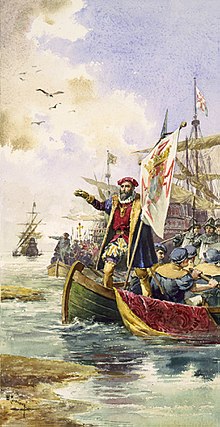
Contact with Europeans after the arrival of Vasco Da Gama in 1498 gave way to struggles between colonial and native interests. In 1795, the area was under British dominion. After independence, the state of Kerala was created in 1956 from the former state of Travancore-Cochin, the Malabar district of Madras State, and the Kasaragod taluk of Dakshina Kannada.[5]
 Mohanlal Vishwanathan Nair, known mononymously as Mohanlal, is an Indian film actor and producer best known for his work in Malayalam films. Mohanlal made his acting debut in Thiranottam but the film was never released due to censorship issues.